selling
How Selling Online Stopped Being for “Tech People”
The internet was built by engineers, for engineers. Here’s what changed, and why any small business can finally have a real shop online.
There was a time, not long ago, when "having a website" meant knowing someone. You needed a developer, or you needed to become one. You needed to understand hosting, domains, something called DNS that nobody could explain in one sentence, and a dashboard full of settings that assumed you already knew what you were doing. If you ran a small business and wanted a real presence online, the honest options were: pay a lot of money, learn to code, or don't.
Millions of business owners quietly chose "don't." Not because they lacked ambition. Because the door was locked, and the key was written in a language they'd never been taught.
The web was never built for the people who needed it most
Here's the uncomfortable truth about the early internet: it was built by technical people, for technical people, and everyone else was expected to catch up. HTML, servers, hosting providers, SSL certificates, none of this was designed with a fabric seller in Yaba or a shoemaker in Aba in mind. It was designed by engineers solving engineering problems, and the assumption, often unspoken, was that anyone who wanted in would learn the language.
For a while, that was fine, because the internet was mostly for engineers anyway. But then something happened that the early web didn't fully plan for: everyone else showed up. Small business owners, market traders, tailors, hairdressers, people who understood their customers better than any developer ever could, but who had never written a line of code and had no interest in starting now.
The web had a population problem. Everyone wanted in, but the door was still built for the few who could already read the sign above it.
The DM economy: a workaround, not a solution
If you've spent any time on Nigerian Instagram or WhatsApp, you already know what happened next. Business owners didn't wait for the web to become friendlier. They built around it.
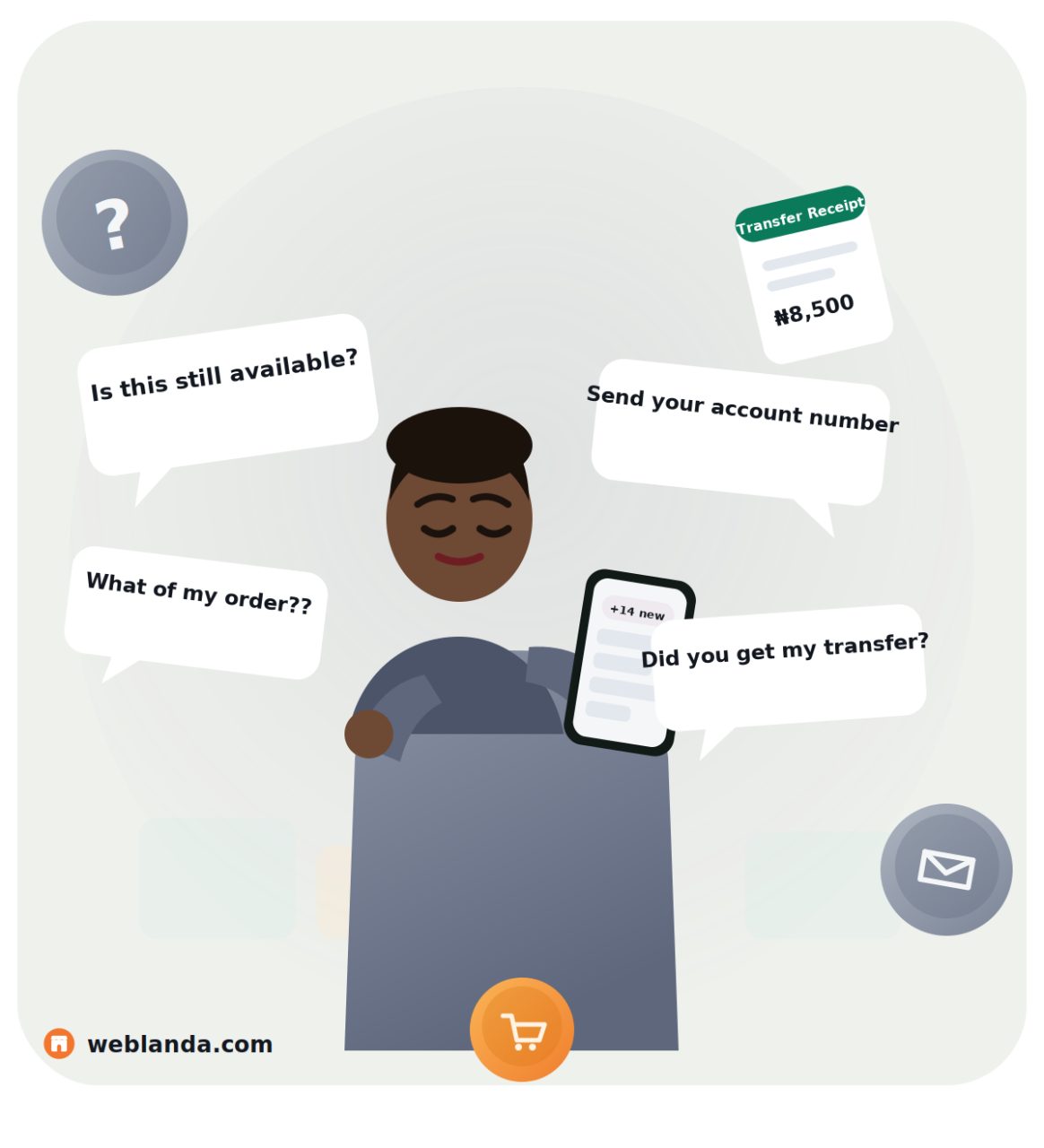
"DM to order." "Send your account number." "Price is 15k, kindly confirm before we ship." An entire economy grew inside direct messages, because DMs didn't require a website, a domain, or a developer. They just required a phone, which everyone already had.
It worked, in the way that a workaround always works: well enough to survive, badly enough to leave money on the table. Every order lived in a scattered thread of messages. Every payment was a screenshot and a prayer. Every customer who got tired of typing "is this still available?" for the third time simply walked away, and nobody would ever know they'd been lost. The DM economy solved the access problem, anyone could sell something, but it never solved the trust problem or the scale problem. A shop that lives entirely in a chat window cannot grow past a certain size, no matter how good the products are.
And here's the part that stings: the seller wasn't doing anything wrong. They were doing the only thing available to them. The tools simply hadn't caught up to what they actually needed.
The shift that's happening now isn't about the web getting simpler. It's about a different question being asked entirely. For twenty years, the industry asked: how do we make website-building easier? Drag-and-drop editors, templates, page builders, each one a genuine improvement, each one still assuming the person on the other end wanted to build something.
The better question turned out to be: what if they don't want to build anything at all?
A tailor doesn't want to design a website. She wants customers to see her dresses and pay her without an argument about the transfer. A phone accessories seller doesn't want to configure a payment gateway. He wants his customers to click "buy" and have the money actually land somewhere he can withdraw it. Nobody selling shoes in Lagos woke up wanting to learn web development. They wanted to sell shoes.
This is the quiet shift underneath everything: technology finally became invisible enough that the person using it doesn't need to know it's there. You don't need to understand how a car engine works to drive to the market. You shouldn't need to understand hosting to sell online.
Where Weblanda fits into this story
This is the gap Weblanda exists to close. Not by making website-building easier, but by removing the need to build one at all.
A Weblanda shop isn't something you construct. It's something you're handed, already working, checkout and delivery already wired in, and all you do is add your products. No code. No designer. No hosting to think about. No developer friend you have to beg for a favor. Just a real, working shop under your name, running from the phone you already own, because that's the device every Nigerian seller actually has in their pocket, not a laptop, not a developer's toolkit.
The philosophy is simple, almost stubbornly so: a business owner's job is to know their customers and their products. It was never supposed to be their job to also become a part-time software engineer just to take payment for a dress. Weblanda quietly does the technical part in the background, checkout, delivery booking, tracking, one dashboard to see it all, so the seller can spend their energy where it actually pays off: on the business itself.
There's a reason Weblanda takes 0% of what a seller earns from their own sales. What a seller makes from their own hard work selling their own products should stay theirs. Weblanda's role is simply to give them a real place to sell from, not to take a cut of every conversation they successfully turn into a customer.
And for the business owner who wants something more specific, a portfolio, a restaurant menu site, something bespoke, there's Custom Build: a real person builds it for a fixed price, so even the seller who wants something entirely their own never has to touch a line of code either.
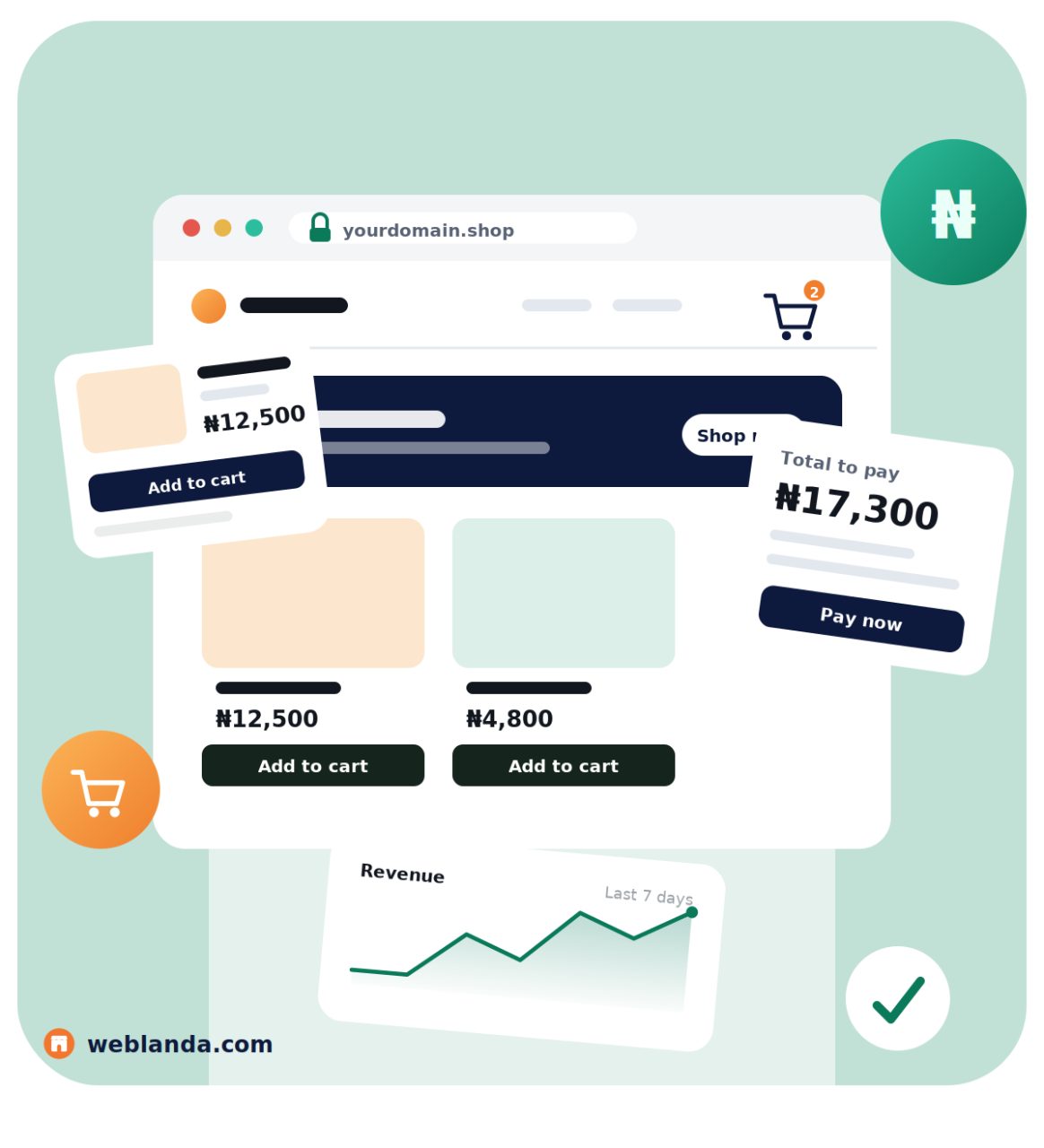
None of this is an argument against WhatsApp or Instagram. Social selling isn't a problem to be solved away, it's how trust gets built in the first place, and it will always be part of how Nigerian commerce works. The point was never to replace the conversation. It's to give that conversation somewhere real to land. Instead of "send your account number," a seller can now just send a link, one that shows their products properly, takes payment safely, and arranges delivery without anyone needing to type "did you get my transfer?" ever again.
Everyone deserves a door that isn't locked
The internet has spent thirty years getting more powerful and, for most of that time, more complicated right alongside it. What's changing now, slowly, seller by seller, is the idea that power and complexity have to travel together. They don't. A shop can be genuinely powerful, real checkout, real delivery, real customers, without asking the person running it to understand anything about how it works underneath.
That's the bet behind Weblanda: that the next wave of online business in Nigeria won't come from more people learning to code. It'll come from removing the requirement that they ever needed to.
The web was never supposed to be only for the people who already knew how to build it. It's for the tailor, the shoemaker, the woman selling shea butter from her living room, and every business owner who's been ready to sell online for years, waiting only for someone to finally hand them the key.