marketing
The Caption Formula: Why Some Posts Sell and Others Just Sit There
Vol. 2 of our marketing series. Two sellers post the same product. One sells out, one gets silence. The difference is almost never the product.
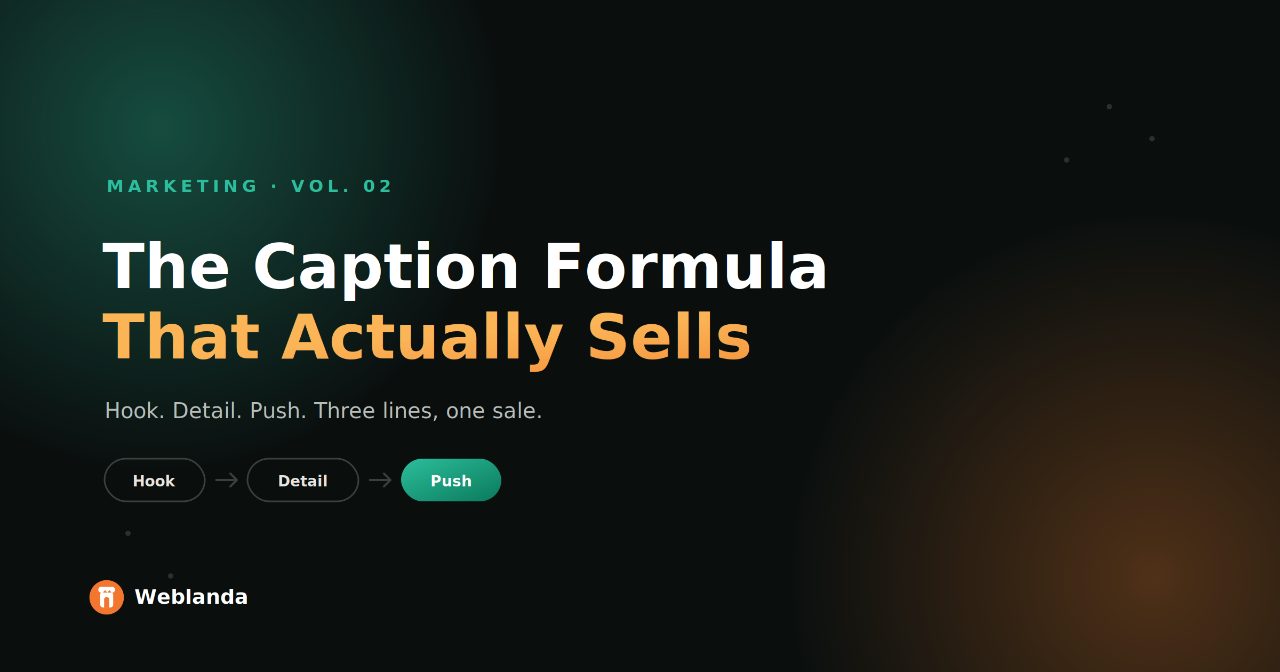
Marketing, Vol. 2
Here's something that trips people up the first time they notice it: two sellers post the exact same kind of product, same quality, same price, similar following, and one gets comments and orders while the other gets a handful of likes and silence. It's tempting to blame the algorithm, or luck, or "some people just have it." Usually it's neither. It's the caption, and captions follow patterns that are learnable, not magic.
This isn't about being a naturally gifted writer. It's about knowing what a caption actually has to do, and doing those specific things on purpose instead of just describing the product and hoping.
What a caption's job actually is
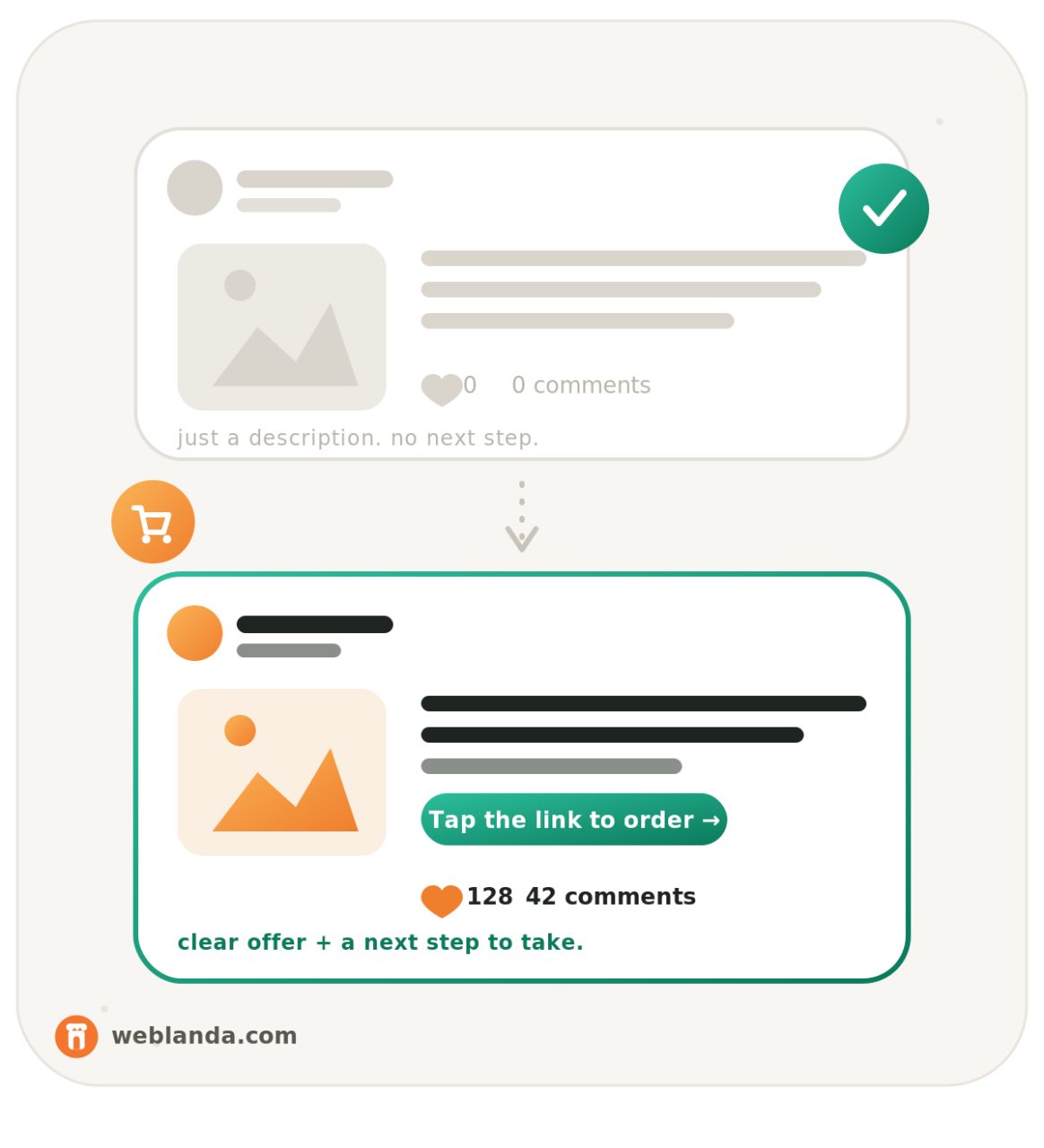
Most struggling captions describe. "New arrivals. Sizes available. DM to order." That's information, and information alone rarely moves anyone to act. A caption that sells does something different: it makes the reader picture themselves already owning the thing, removes their hesitation, and tells them exactly what to do next. Description, image, and action, in that order, is the whole formula underneath almost every caption that works.
The instinct is to open with what the item is. "This gorgeous ankara gown, handmade with..." The stronger opener starts with the reader's situation instead. "Tired of getting to an event and seeing three other people in the same outfit?" Now the reader sees themselves in the sentence before they've even looked at the photo, which means they're already listening by the time you describe the product. A caption that opens with the product is talking to everyone and no one. A caption that opens with a situation is talking directly to the one person scrolling past who has that exact problem.
Sell the after, not the item
Nobody buys a blender. They buy the smoothie they'll make every morning, or the fact that they'll finally use that gym membership. Nobody buys a phone case, they buy not flinching every time their phone slips off the couch. Every product is standing in for some after-state the buyer actually wants, and the caption that names that after-state directly outsells the one that just lists specs.
A practical way to find it: finish the sentence "so that you can..." for your own product. A skincare oil isn't "cold-pressed and unrefined," it's cold-pressed and unrefined so that your skin stops feeling tight by evening. That second half is the sentence that actually sells.
Be specific, because vague is invisible
"High quality" and "affordable" are the two most overused, least believed words in Nigerian social selling, because everyone says them and nobody backs them up. Specificity is what makes a claim believable. Not "durable," but "still holding up after six months of daily wear." Not "affordable," but the actual price, stated plainly, because a hidden price reads as expensive by default and a stated one lets the right buyer self-select immediately. A specific detail costs you nothing and buys you trust a vague adjective never earns.
Answer the objection before it's asked
Every product has a silent question sitting in the reader's head before they'll buy: does this run true to size, how long does delivery actually take, is this really as pictured. A caption that pretends the objection doesn't exist leaves the reader to quietly decide "maybe not" and scroll on. A caption that answers it head-on, in one line, removes the exact thing that was stopping the sale. "Runs true to size, this is a UK 10 on a UK 10 frame" does more work than any amount of extra product description.
End with one instruction, not several
A caption that says "DM to order, or comment below, or check the link in bio, or visit our shop for more" is asking the reader to make a decision about how to buy, on top of the decision to buy at all. Every extra option is a place someone can hesitate and leave. The strongest captions end with exactly one clear next step. "Tap the link to order" beats three options every time, because a confused reader doesn't ask which button to press, they just leave.
A caption is never finished on the first draft
The version that goes out rarely resembles the first one written. The habit worth building is writing the caption, reading it back as if you were the customer and not the seller, and cutting anything that describes rather than sells. If a sentence could sit under any seller's product with no changes, it's not doing its job yet. The caption should feel like it could only belong to this specific product, for this specific person, and nowhere else.
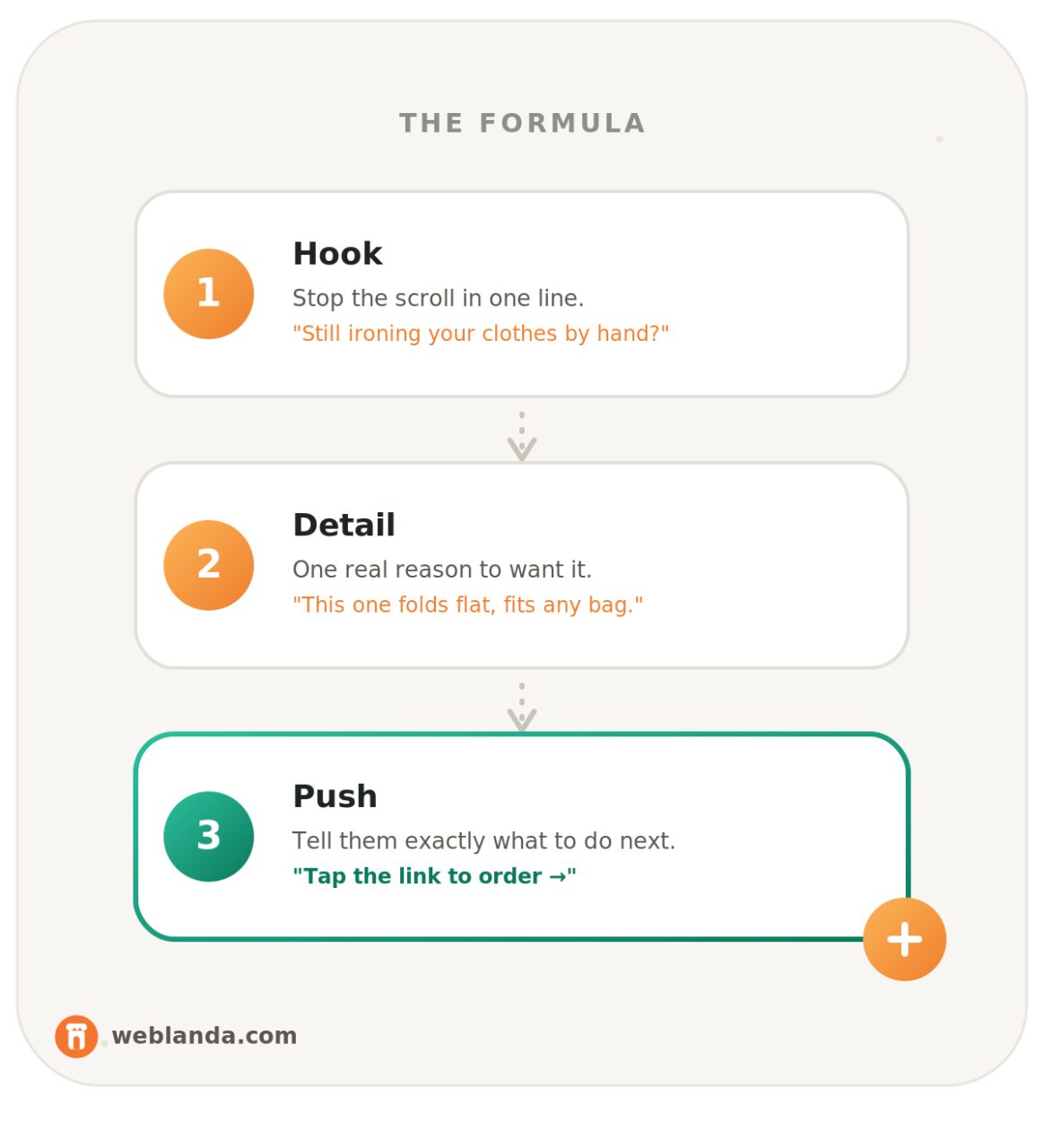
Open with the reader's situation. Name the after-state the product delivers. Get specific instead of vague. Answer the doubt before it's spoken. End with one clear thing to do.
None of this requires being a natural-born salesperson. It requires knowing what a sentence is supposed to accomplish before you write it, the same way a good delivery process isn't about being naturally organized, it's about knowing what has to happen in what order. Write the next caption with those five things in mind, and see what happens to the comments.
This is Vol. 2 of our marketing series for small sellers. Catch Vol. 1, "Nobody Finds Your Shop by Accident," if you missed it. Vol. 3 is coming.