general
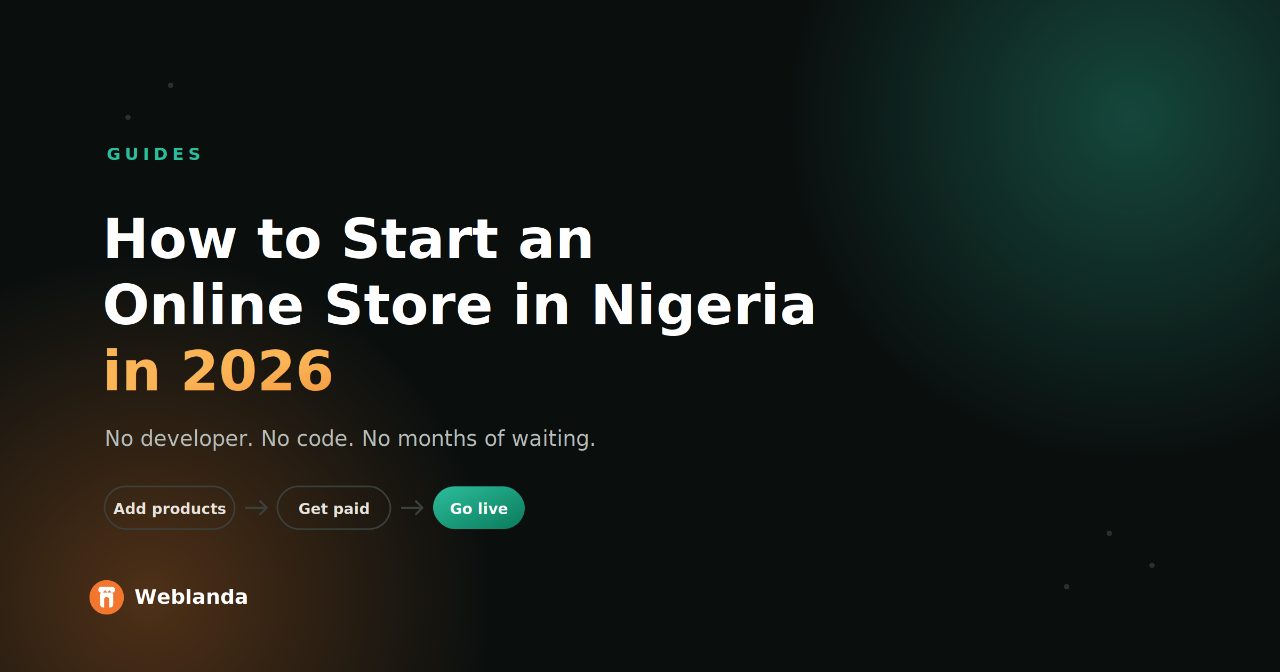
How to Start an Online Store in Nigeria in 2026 (No Developer Needed)
A practical, no-fluff guide to setting up an online store in Nigeria this year, without hiring a developer or learning to code. TOPIC: Getting Started / Guides
Every week, someone messages a small business owner asking "do you have a website?" and the honest answer is no, just an Instagram page and a prayer that DMs don't get missed.
If you're thinking about finally setting up a proper online store in Nigeria, here's the good news: you don't need to hire a developer, you don't need to learn to code, and you don't need to spend months on it. Here's exactly how to do it in 2026.
1. Decide what "online store" actually means for you
Before anything else, be clear on what you're building. Most Nigerian sellers don't need a custom, from-scratch website. What you actually need is:
- A page customers can visit that shows your products and prices
- A way for them to pay you directly, without a back-and-forth over DMs
- Somewhere to track orders so nothing gets lost or forgotten
That's it. Anything more than that is optional, not essential, especially in the beginning.
2. Skip the developer route (for now)
Hiring a developer to build a custom site from scratch can cost anywhere from a few hundred thousand naira upward, take weeks, and still need a developer on standby every time something breaks or you want to add a new product category.
Tools built specifically for sellers, like Instant Shop on Weblanda, exist so you can skip that entirely. You add your products, set your prices, and your store is live the same day, no code, no waiting on anyone.
This doesn't mean a custom developer-built site is never worth it. It's worth it once you're at a scale where you need something very specific that off-the-shelf tools can't do. Almost no one is at that stage on day one.
3. Set up your store
With Weblanda, this looks like:
- Sign up and pick your store name
- Add your products with photos, prices, and any variants (size, color, etc.)
- Connect a way to receive payments (bank transfer or card, depending on what you set up)
- Set your delivery options, whether that's a courier partner or your own delivery arrangement
Most sellers have this done in under an hour, including uploading their first batch of products.
4. Get your payment collection right from day one
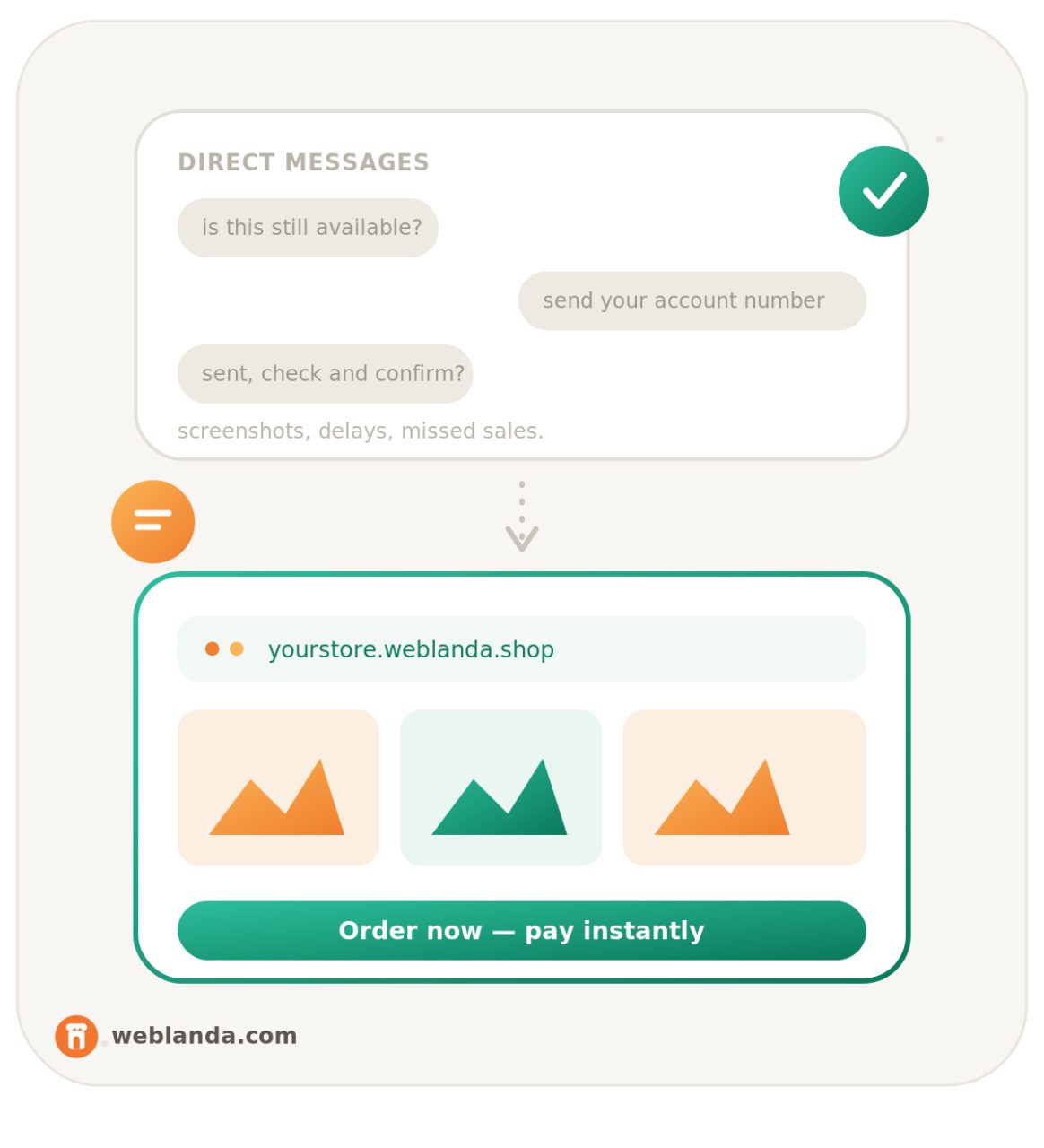
This is where a lot of sellers lose money without realizing it. If you're still collecting payment by sending your account number in a DM and waiting for a screenshot, you're losing sales. Some customers won't bother, some will "send later" and never do, and some will pay and you won't notice the alert in time.
5. Sort out delivery before your first order comes in
Don't wait until someone has already paid to figure out how you're getting the product to them. Decide upfront:
- Are you delivering within your city yourself, or using a courier?
- Do you have accurate delivery pricing, or are you guessing and hoping it covers your cost?
- What happens if an order is outside your normal delivery area?
Weblanda connects sellers to a network of delivery couriers, so you're not negotiating pickup and pricing manually for every single order.
6. Share your store link everywhere your customers already are
Once your store is live, the store itself doesn't sell anything sitting quietly on its own. Put the link:
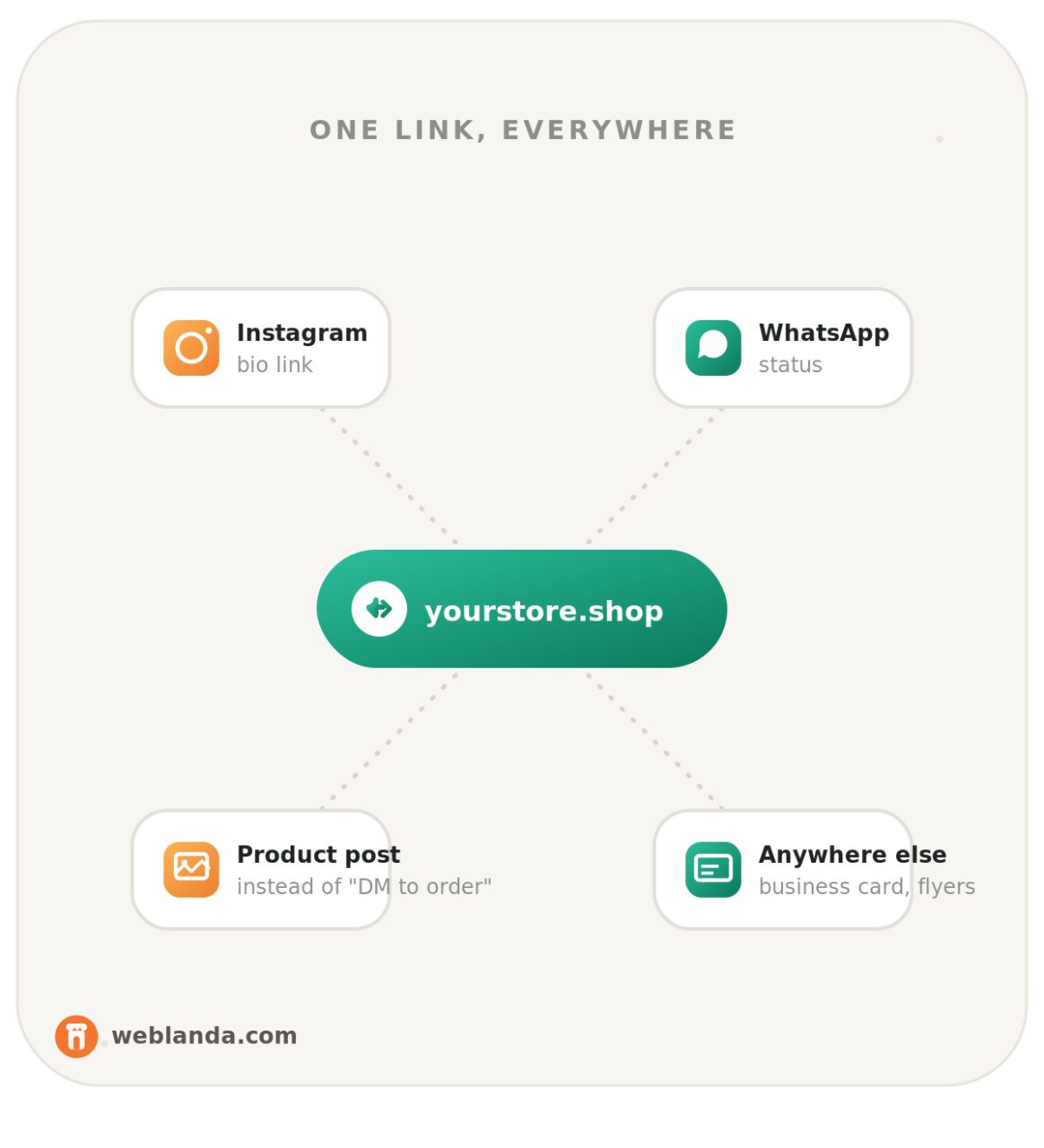
- In your Instagram and WhatsApp Business bio
- Pinned in your WhatsApp status
- In every product post, instead of "DM to order"
- On your business card, if you still use one
7. Keep it simple while you grow
You don't need every feature on day one. Start with your core products, get comfortable taking orders through your store, and add more (discount codes, more product categories, multiple locations) as you actually need them, not because a checklist somewhere said you should.
The bottom line
Starting an online store in Nigeria in 2026 doesn't require a developer, a big budget, or weeks of setup. It requires picking a tool built for sellers, adding your products, and putting the link in front of the customers you already have. Weblanda's Instant Shop is built to get you from "just an Instagram page" to a real store you can send anyone to, in the time it takes to have a cup of tea.
If you're still taking orders by DM, that's the one thing worth changing this week.